Buying watches in Singapore: authorised dealers, parallel sellers, and GST
Singapore groups brand boutiques and multi-brand authorised dealers in a few malls, and it also has established parallel sellers. GST-registered businesses display prices inclusive of GST. A watch carried in from overseas still meets Singapore’s 9% GST rules, and a pre-owned watch bought from a business in Singapore falls under the Lemon Law.
Authorised dealer and parallel seller
Authorised dealer
What the path includes
- A brand warranty path through a retailer on the brand’s store finder
- Service intake at the brand’s Singapore centre when the warranty card matches
What differs
- The authorised dealer price can sit above a parallel-seller quote for the same reference
- Which references a shop receives (allocation) is not published
Parallel seller
What the path includes
- A quote that can differ from the authorised dealer price
- A wider set of references than one boutique counter
What differs
- Warranty terms are the seller’s, and they can differ from a brand international warranty
- Return terms are the seller’s
Where the watch shops are
Which dealer carries which brand is on the authorised dealer list.
- Orchard Road belt — ION Orchard (Cartier; Cortina has Patek Philippe and Franck Muller boutiques; Red Army Watches has a store here), Ngee Ann City / Takashimaya (Cartier, Sincere) and Paragon (Cortina).
- Marina Bay Sands (The Shoppes) — Cartier; Sincere (Tudor, Bell & Ross); Cortina (Patek Philippe, Franck Muller).
- Peninsula Plaza (City Hall) — Peng Kwee Watches is at #01-46. Its site lists new and pre-owned watches. Peng Kwee Watches is not on the authorised dealer list.
- Heartland malls — Vincent Watch has stores at Causeway Point, Tampines Mall, Toa Payoh HDB Hub, Jurong Point, JEM and Bedok Mall.
- Suntec City — Red Army Watches has a store here.
GST-registered businesses must display and quote prices inclusive of GST (IRAS).
Sources (October 2026): ION Orchard — shop · Cartier — Singapore boutiques · Sincere — boutiques · Cortina — boutiques · Peng Kwee Watches — contact · Vincent Watch — stores · Red Army Watches — visit
An authorised dealer price and a parallel-seller price are comparable when both quotes name the same reference and the same box, card, and warranty terms. Tudor and Omega prices published by sellers are on the S$3,000–10,000 list.
On the wrist
Try it on, or compare a watch you own with the Fit checker.
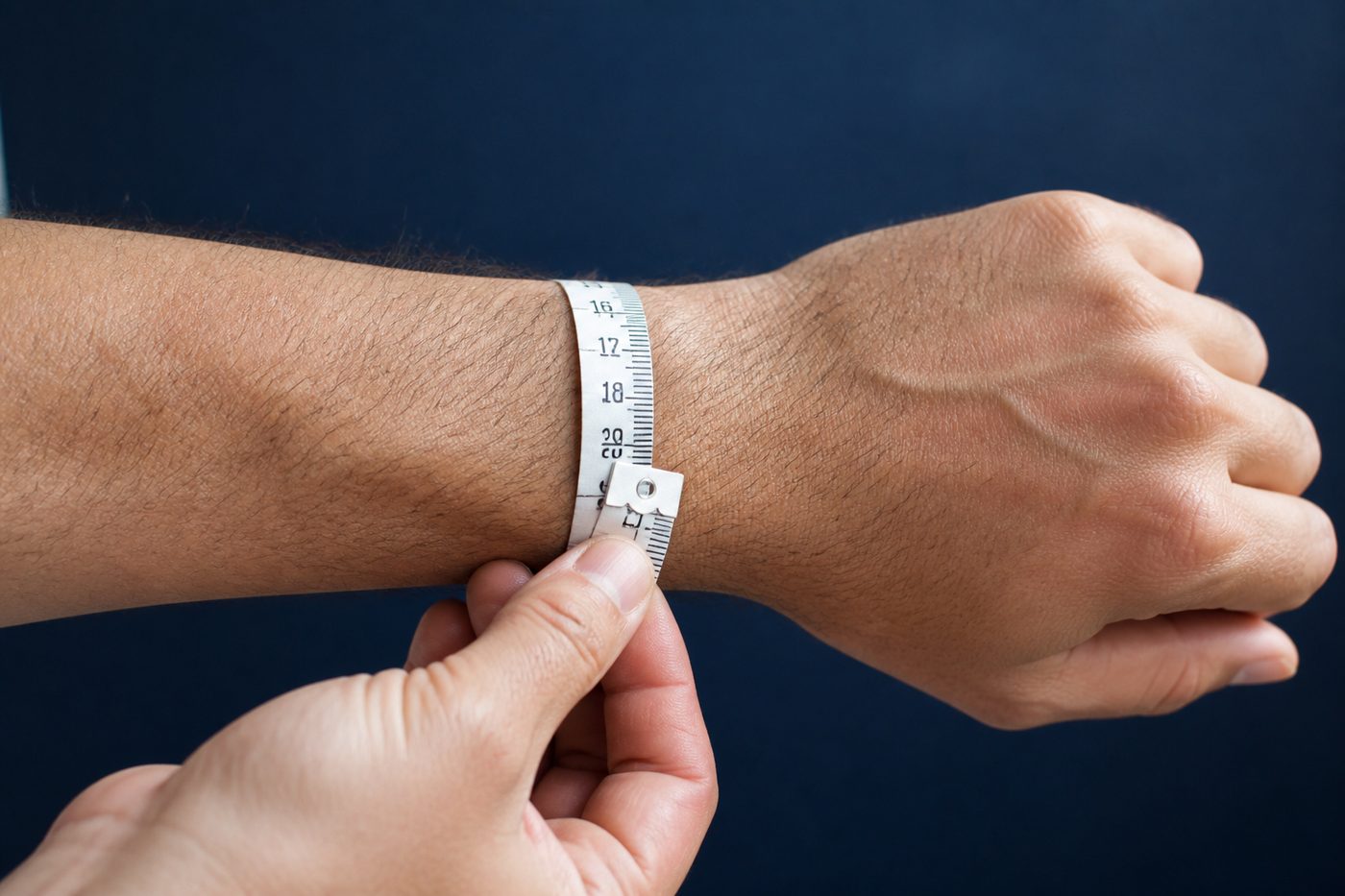
Which counter carries which brand is on the authorised dealer list. Wrist circumference is on the sizing guide.
GST notes
IRAS requires GST-registered businesses to display and quote prices inclusive of GST. That rule covers an authorised dealer and a GST-registered parallel seller alike.
The SG GST estimator applies 9% GST, traveller relief of S$500 or S$100, the S$400 parcel threshold, and no customs duty on watches to a figure already in Singapore dollars. It does not convert foreign currency. See Buying in Japan vs buying in Singapore.
Buying in Japan vs buying in Singapore
Japan’s tax-free rules are scheduled to change on 1 November 2026. Purchases on or before 31 October 2026 follow the old point-of-sale rules. Purchases from 1 November 2026 follow the new refund method, keyed to the date of sale, not the departure date, with no overlap period.
Sources: Japan’s National Tax Agency (NTA) tax reform leaflet · NTA refund Q&A · Japan Tourism Agency (JTA) refund method
A purchase in Japan can remove Japan’s 10% consumption tax at the till or by a later refund. Singapore GST is still due on goods brought home. Warranty terms for that purchase are on the service centres directory. Published Singapore prices are on the budget list.
Japan's tax-free shopping, rules for purchases until 31 Oct 2026
As of 28 Sep 2026, per Japan's published rules:
- Japan's standard consumption tax rate is 10% (7.8% national plus 2.2% local). A reduced 8% rate applies to food and drink, not watches.
- Eligibility: non-residents of foreign nationality who can show they have been in Japan less than six months since entry. Diplomats, officials and US military are excluded. You'll be refused if you work in Japan or your passport has no arrival stamp.
- Minimum spend: general goods (which include watches) need ¥5,000 or more per shop per day, based on the price excluding consumption tax. The ¥5,000–¥500,000 band with sealed packaging applies to consumables only.
- At the shop: present your passport at a registered tax-free shop. The shop records your purchase electronically, and you pay the tax-exclusive price. Some shops use a counter refund instead.
- The goods must leave Japan with you. Present your passport to Japan Customs when you depart. You may be taxed if you don't have the goods with you, and the goods can't be disposed of in Japan. Under the old rules the Customs check happens after security.
- Posting tax-free goods home yourself (the “separate shipment” method) was abolished on 31 Mar 2025.
Sources: NTA consumption tax · JTA tax-free shops · JTA point-and-speak (PDF) · JTA traveller FAQ
Japan's tax-free shopping, refund method for purchases from 1 Nov 2026
As of 28 Sep 2026, per the NTA and Japan Tourism Agency:
- Start date: 1 November 2026. The rule goes by the date of sale, not the date you leave Japan. There is no transition period.
- At the shop you pay the full tax-inclusive price. You get back the amount equivalent to consumption tax only after Japan Customs confirms at departure that you are taking the goods out.
- Deadline: clear the Customs check when leaving Japan within 90 days of purchase (counting from the day after purchase).
- Minimum spend stays at ¥5,000 or more, tax excluded, per shop per day. No upper cap, but quantities are limited to what you can personally carry out of Japan.
- Eligibility: foreign-national non-residents in Japan less than six months since entry, who show a passport at the shop.
- High-value watches: for any item with a unit price of ¥1,000,000 or more (excluding tax), the shop must record product details including brand, model number and serial number. Customs may ask to see the certificate or warranty card.
- At the airport: the check happens before baggage check-in, in the departure lobby before security. Scan your passport at a tax-free kiosk. A green result means you're done; a red result means you must show the goods at Customs inspection. You can't get checked bags back to do this, and you must have every item on a receipt with you, or that whole receipt fails.
- Refund timing and method (bank transfer, card, app, or cash at the port) vary by shop. Consumption tax law sets no rules on how the refund is paid.
- If you don't export goods that passed the check, the tax is collected and penalties may apply.
Sources: NTA tax reform leaflet · NTA refund Q&A · JTA refund method · JTA changes (PDF) · JTA eligible purchasers (PDF) · NTA/Japan Customs leaflet (PDF)
| Purchases until 31 Oct 2026 | Purchases from 1 Nov 2026 | |
|---|---|---|
| What you pay at the till | Tax-exclusive price (or counter refund) | Full tax-inclusive price |
| Minimum spend | ¥5,000+ per shop per day (general goods) | ¥5,000+ per shop per day, tax excluded |
| Maximum | ¥500,000 cap on consumables only | No cap; must be carryable |
| Customs check on departure | After security | Before check-in and security, within 90 days of purchase |
| When you get the tax back | At purchase | After Customs confirms export |
Bringing it home: Singapore GST and your relief
As of 28 Sep 2026, per Singapore Customs and IRAS:
- Singapore GST is 9%.
- All goods brought into Singapore attract GST on their value (which may include cost, insurance and freight), whether or not foreign tax was paid or refunded.
- Relief on new goods for personal use: up to S$500 if you were away 48 hours or more, and up to S$100 if under 48 hours. GST is charged only on the value above your relief. Example: a S$2,000 bag after 48 hours or more. GST = (S$2,000 − S$500) × 9% = S$135.
- Work permit, employment pass, student pass, dependant's pass, long-term pass holders and crew get no relief on new goods.
- A watch you buy overseas counts as new even if you wear it on the trip. Only things you owned before leaving Singapore count as “used articles”.
- Watches carry no customs duty in Singapore — GST only. Only liquor, tobacco, motor vehicles, and petroleum products are dutiable.
- Relief is per traveller, for goods that are that traveller's own property. You must declare goods you carry on behalf of other people.
- Declare and pay via the Customs@SG web application up to 3 days before arrival (walk through the Green Channel with your e-receipt), or at the Red Channel or a Customs Declaration Kiosk. Keep receipts — without them, Customs values goods by comparison.
- Not declaring, or declaring incorrectly, is an offence. For non-dutiable goods such as watches, the composition amount is up to 20 times the GST, minimum S$50. Serious cases, or penalties above S$5,000, can go to court without a composition offer.
- If a Japanese shop ships the watch to you, parcel rules apply instead: postal or air imports of S$400 cost, insurance, and freight (CIF) or less get relief, or GST may be charged at checkout by a GST-registered overseas vendor. Above S$400, GST is due on the full value.
Sources: IRAS GST rates · Singapore Customs GST relief · IRAS travellers · Singapore Customs dutiable goods · Customs@SG web app · Travel rules and penalties · Postal/courier GST
Worked example (hypothetical)
Hypothetical arithmetic only. This isn't a real watch or a real price, and it uses no real exchange rate. Rules as of 28 Sep 2026.
Say a watch in Japan is priced at ¥500,000 before tax. Japan's consumption tax at 10% is ¥50,000, so the tax-inclusive price is ¥550,000.
Japan, bought on or before 31 Oct 2026 (eligible visitor, registered tax-free shop): you pay ¥500,000 at the till. Saving: ¥50,000 at purchase.
Japan, bought from 1 Nov 2026: you pay ¥550,000. After Japan Customs confirms export at departure, within 90 days, the shop or its refund provider pays back the ¥50,000 tax amount. How and when you get it depends on the shop.
Back in Singapore: convert the price on your receipt into S$ using the rate on your card statement or receipt. Call it V.
- Away 48 hours or more: GST = 9% × (V − S$500)
- Away under 48 hours: GST = 9% × (V − S$100)
- If V is at or below your relief, no GST is due. There's no customs duty on watches.
Customs' own example: a S$2,000 purchase after 48+ hours means 9% × S$1,500 = S$135. Declare and pay through the Customs@SG web app before landing, or at the Red Channel.
Sources: NTA tax reform leaflet · JTA refund method · Singapore Customs GST relief
Warranty and after-sales for watches bought in Japan
- Grand Seiko’s Singapore site says its worldwide warranty lasts five years from purchase, issued by an authorised Grand Seiko dealer at the time of purchase, and the claim needs the filled-in warranty card.
- A model sold only in Japan can be harder to service, or to get parts for, in Singapore. The brand’s Singapore centre is on the service centres directory.
- Singapore’s Lemon Law covers goods bought in Singapore. The Small Claims Tribunals can’t hear claims against a respondent outside Singapore. Singapore remedies are limited for a Japan purchase.
- The authorised dealer list names the local warranty path.
Sources: Grand Seiko Singapore warranty · CASE Lemon Law · Singapore Judiciary small claims
Buying pre-owned in Singapore
A pre-owned watch can be an older, smaller reference. The published buyer rules are the Lemon Law, dealer licensing, and GST on the invoice.
Your rights: Lemon Law, CASE and the Small Claims Tribunals
As of 28 Sep 2026, per the Consumers Association of Singapore (CASE) and the Ministry of Trade and Industry (MTI):
- The Lemon Law is part of the Consumer Protection (Fair Trading) Act (CPFTA), Sections 13–18.
- If goods don't conform to the contract, you can ask for repair or replacement first. If that isn't possible or reasonable, you can ask for a price reduction or a refund, and you must give the retailer reasonable time first.
- Six-month presumption: a defect found within six months of delivery is presumed to have existed at delivery unless the retailer proves otherwise. After six months, you have to prove it.
- Second-hand goods are covered. “Satisfactory quality” takes into account the item's age and the price paid.
- It doesn't apply to consumer-to-consumer sales (private sellers) or to services.
- No remedy if you damaged or misused the item; someone other than the seller tried to repair it and caused damage; you were told about the fault before buying; you changed your mind; or the fault is wear and tear.
- A retailer can't remove these rights with a notice like “no refunds” or “sold as is”.
- CASE (Consumers Association of Singapore, 6277 5100) is the first point of contact for local consumers. It helps through negotiation or mediation. The Competition and Consumer Commission of Singapore (CCS) handles only persistent, egregious businesses.
- Small Claims Tribunals: claims up to S$20,000, or S$30,000 with a Memorandum of Consent from both parties. File within 2 years. The respondent must be in Singapore.
Sources: CASE · MTI Lemon Law advisory · Singapore Judiciary · CCS
Second-hand dealer licensing
As of 28 Sep 2026, per the Singapore Police Force:
- Businesses that deal in regulated second-hand goods must hold a Secondhand Goods Dealer licence under the Secondhand Goods Dealers Act 2007, unless the Police have exempted them.
- A separate licence is needed for each branch or website URL.
- Licensed and exempted dealers must record transactions in SHOTS, the Police e-service for secondhand-goods transaction records. Before buying an item that has a serial number, they must screen it, and they must not buy it if the check shows “RECORD FOUND”.
- A licensed dealer records the serial number on regulated second-hand goods.
- Precious-metal items: a dealer registered as a regulated dealer under the Precious Stones and Precious Metals (Prevention of Money Laundering, Terrorism Financing and Proliferation Financing) Act 2019 (“PSPM Act”) must check customer identity and file a report for cash or cash-equivalent sales above S$20,000.
Sources: SPF secondhand dealer licence · SPF — licence advisory · SPF transaction records · MinLaw transaction requirements
GST on a pre-owned invoice
As of 28 Sep 2026, per IRAS:
- A GST-registered dealer charges 9% GST on the full price unless it uses the Gross Margin Scheme (GMS). GMS is optional for second-hand goods; GST is worked out only on the dealer's margin.
- Under GMS the dealer can't issue a tax invoice. The invoice won't show GST and must say: “Goods are sold under GST Gross Margin Scheme. Both the seller and buyer cannot claim any input tax on the goods.” It should also show a description with the unique identification number where available (for a watch, the serial).
- IRAS's Discounted Sale Price Scheme (GST on 50% of the price) applies to second-hand vehicles, not watches.
- Dealers with taxable turnover of S$1 million or less a year don't have to register for GST, so some invoices carry no GST at all.
- The figure on the invoice is the total price, whether or not that invoice shows GST.
Sources: IRAS Gross Margin Scheme · IRAS Discounted Sale Price Scheme · IRAS GST registration
What the invoice records
- The Lemon Law covers a purchase from a business in Singapore. It does not cover a private sale.
- The serial on the case, the papers, and the invoice are separate records.
- A remaining brand warranty is whatever the warranty card states. A seller’s own warranty is whatever that seller’s terms state.
- Some brands certify pre-owned watches through official retailers. The brand’s store finder names participating retailers.
Service in Singapore
Brand service centres, warranty cards, and 9% GST on out-of-warranty repairs are on the Singapore service centres directory.
FAQ
When does Japan switch to the tax refund system?
For purchases made on or after 1 November 2026. Purchases up to 31 October 2026 follow the old point-of-sale rules, even if you leave Japan after 1 November. There is no overlap period. NTA tax reform leaflet · NTA refund-method Q&A
What's the minimum spend for tax-free shopping in Japan?
¥5,000 or more (excluding tax) per shop per day — the same before and after the switch for goods like watches. From 1 November 2026 there's no upper limit, but you must be able to carry everything out of Japan yourself. NTA tax reform leaflet · JTA — changes (PDF)
How much can I bring back to Singapore without paying GST?
New goods for personal use are relieved up to S$500 if you were away 48 hours or more, or up to S$100 if under 48 hours. You pay 9% GST on the amount above that. Work pass, student pass, dependant's pass and long-term pass holders don't get this relief. Singapore Customs — GST relief · IRAS — travellers · IRAS — GST rates
Is there import duty on watches in Singapore?
No. Only liquor, tobacco, motor vehicles and petroleum products are dutiable. Watches pay GST only. Singapore Customs — dutiable goods
Does the Lemon Law cover a pre-owned watch?
Yes, if you bought it from a business in Singapore. Quality is judged against the watch's age and price, and a defect found within six months is presumed to have existed at delivery. Private-seller sales aren't covered. CASE — Lemon Law · MTI — Lemon Law advisory
Why doesn't my pre-owned invoice show GST?
The dealer may be using IRAS's Gross Margin Scheme. Under it, GST is worked out on the dealer's margin and must not be shown on the invoice. Or the dealer may not be GST-registered at all. IRAS — Gross Margin Scheme · IRAS — GST registration