How to size a watch for a smaller wrist
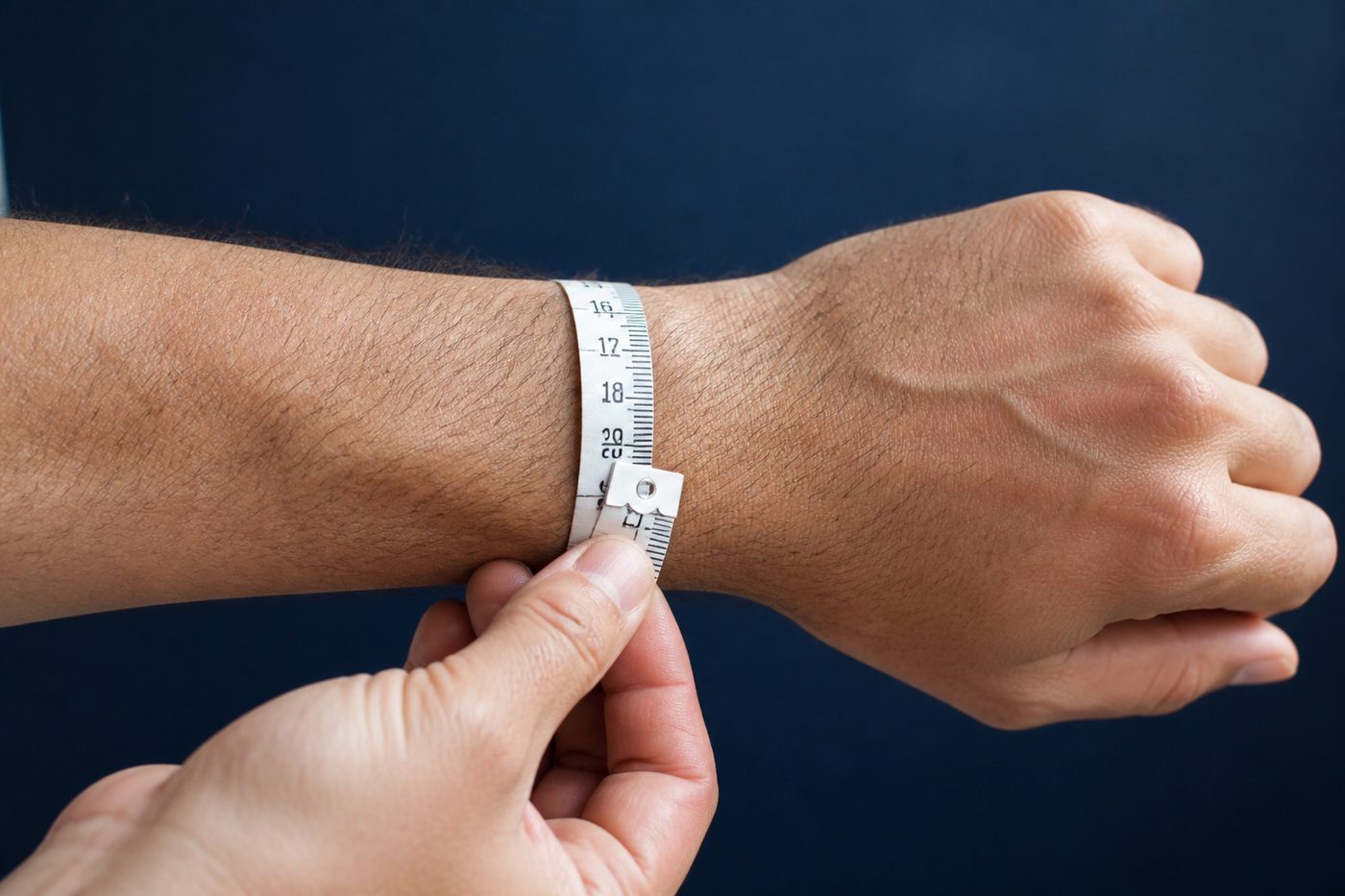
Most buying regret on smaller wrists is not about brand or movement — it is about geometry. A watch that photographs balanced on a 7.5" forearm can overhang a 6.5" wrist and look like a puck. This guide walks through measuring yourself correctly, reading specs the useful way, and setting expectations for three common wrist sizes in Singapore’s climate.
Measure your wrist once — then trust the number
Use a soft tailor’s tape, or print the 1:1 paper tape at 100% / actual size and cut the strip. Wrap just above the wrist bone (where a watch normally sits), snug but not compressing skin. Record both inches and millimetres. Do it twice: once in the morning and once after a warm afternoon. Wrists swell; Singapore humidity makes that more noticeable than people admit.
If you only have a metal tape measure, do not cinch it. Take the paper-strip method instead — it reduces the “I somehow measured 7 inches and every watch hangs off” problem. The printable sheet also has illustrative Ø36 / L2L ~44 and Ø39 / L2L ~50 outlines so you can see short vs long lug-to-lug before you shop.
Tip
Write the number in millimetres (e.g. 165 mm ≈ 6.5"). Spec sheets and forum lug-to-lug figures are almost always metric. Converting back and forth invites rounding errors.
Case diameter is incomplete information
Brands advertise diameter because it is easy to market. On the wrist, lug-to-lug (straight-line distance from one lug tip to the opposite) and how the lugs curve matter more. Two 39 mm watches can wear differently: short, downturned lugs hug a small wrist; long, flat lugs create overhang even when the dial looks “small.”
Also note thickness and crystal height. A 12 mm dress watch vanishes under a cuff; a 14 mm dive watch with a tall sapphire can feel top-heavy on a narrow wrist even when the diameter is conservative. Mass distribution (bracelet vs leather, solid end-links vs hollow) changes perceived size more than Instagram suggests.
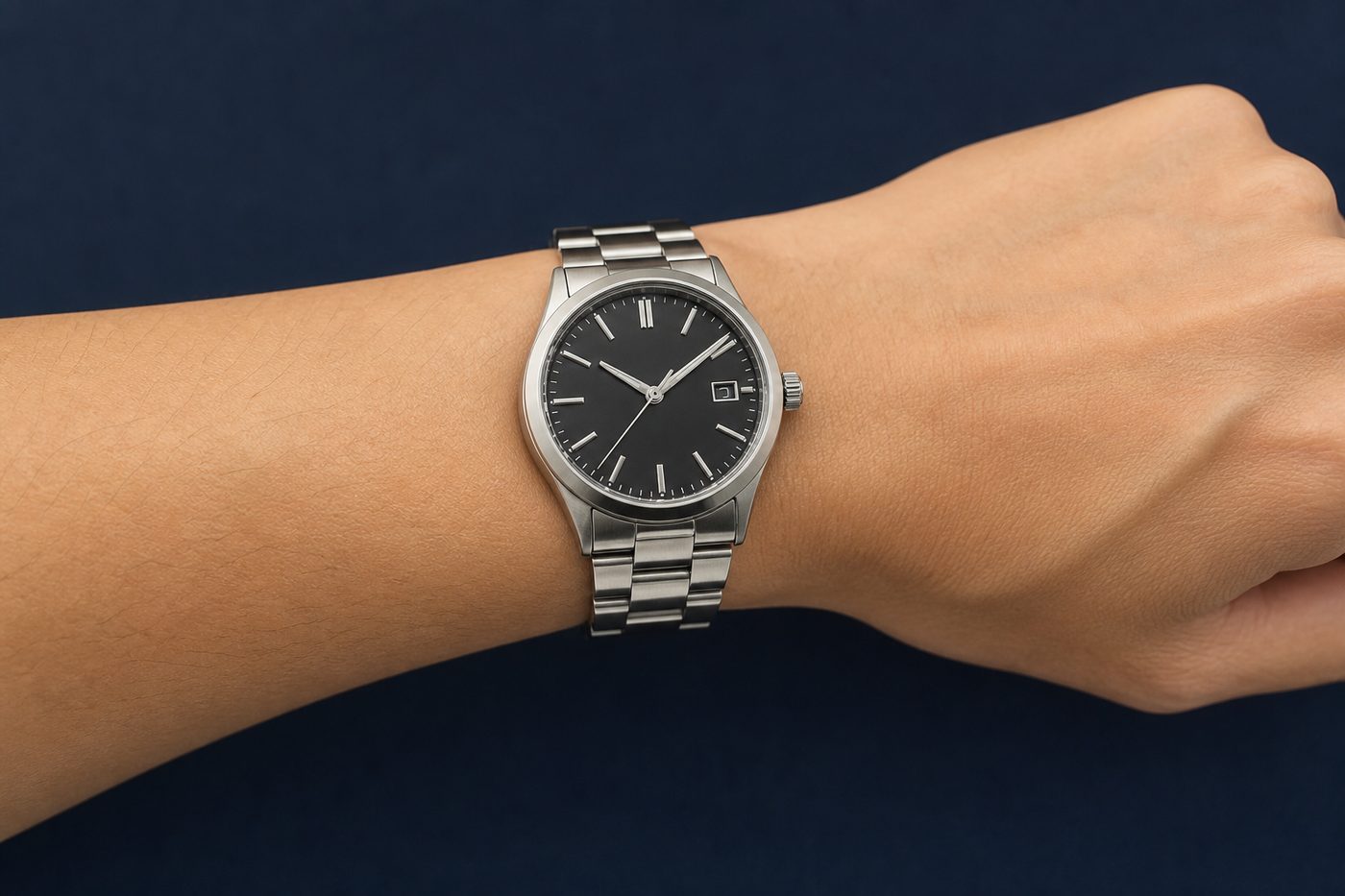
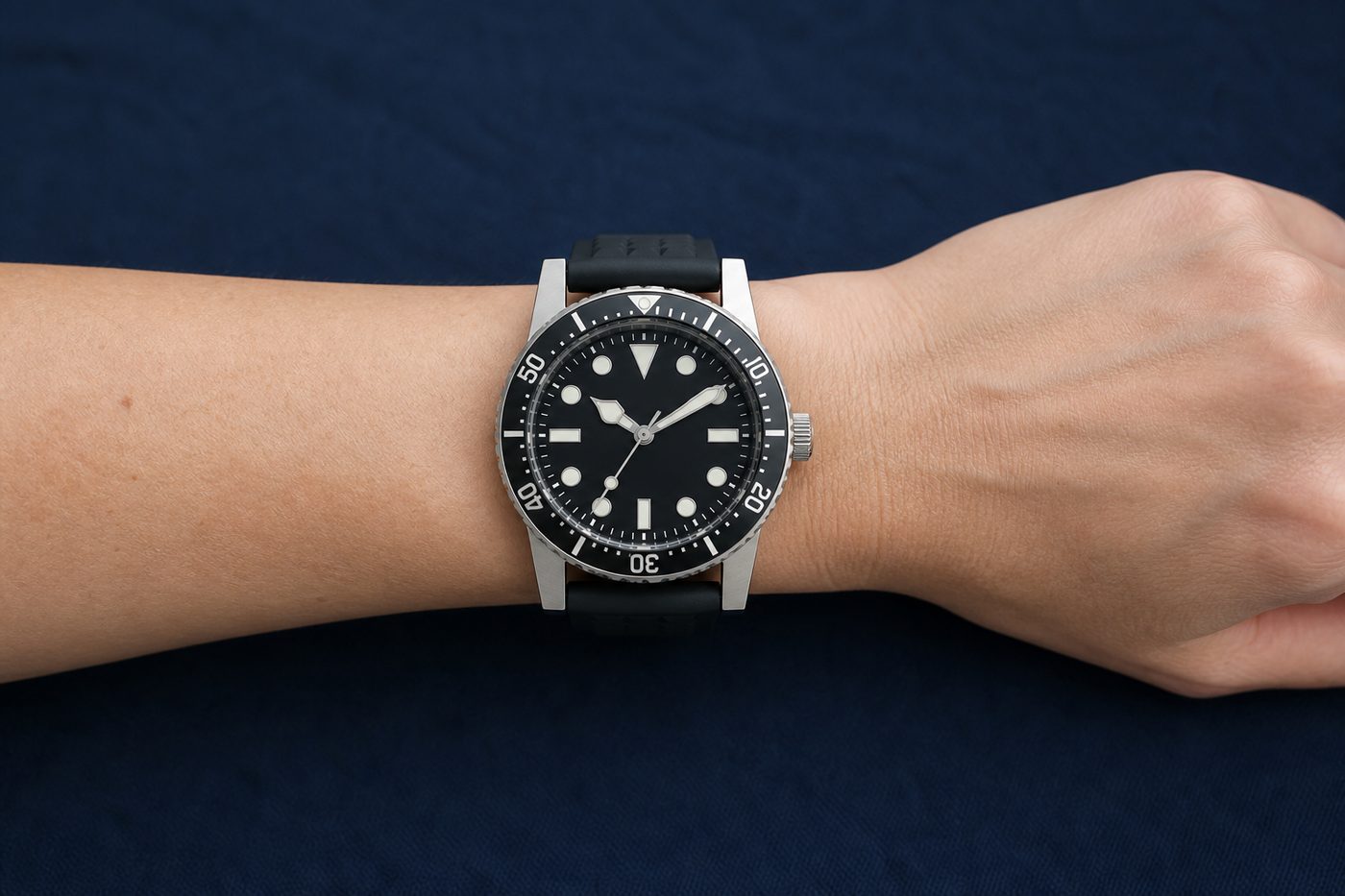
Photos are illustrative (not brand endorsements). Always check lug-to-lug tip-to-tip on the real piece — diameter alone misleads.
What typically fits: 6", 6.5", and 7"
These are heuristics, not laws. Bone structure, how high you wear the watch, and strap choice all move the goalposts. Still, patterns repeat.
| Wrist | Case diameter | Lug-to-lug |
|---|---|---|
| ~6" (≈152 mm) | 34–38 mm | Under ≈46 mm |
| ~6.5" (≈165 mm) | 36–39 mm (some 40 mm with short lugs) | ≈45–48 mm |
| ~7" (≈178 mm) | 38–41 mm | ≈47–50 mm |
At ~6", expect many modern divers to overhang. At ~6.5", BB54-class and 38 mm integrated sports often land well; 41–42 mm “full size” divers are hit-or-miss. At ~7", more options open up — still try thick 42+ tool watches before committing.
At ~6.5" — the focus of most WristFit SG content — you are in the awkward middle: too large for many vintage-only recommendations, too small for the default “41 mm GMT” sales pitch. For a dedicated breakdown of diameter and lug-to-lug bands at this size, see best watch size for a 6.5 inch wrist. Prioritise published lug-to-lug when possible. If a retailer will not share it, ask to measure the display piece with a caliper or a careful ruler across the lug tips.
Bracelet micro-adjust vs strap
On a small wrist, half a link is not a detail — it is the difference between a watch that rotates and one that sits still. Prefer bracelets with useful micro-adjustment (gliding clasp, multiple micro-holes, or tool-free adjusters). Leather and rubber can be friendlier initially because you can punch or choose a hole, but they change length with sweat and rain; budget for that in Singapore. Look for strap taper (e.g. 20 mm down to 16 mm) to reduce underside bulk — see the strap taper & buckle guide.
End-link fit matters too. Hollow end-links that leave a gap make a modest case look larger. Tight, curved end-links visually shrink the footprint. See the breakdown in male vs female end-links.
Try-on protocol that actually helps
- Wear the watch for at least ten minutes, not thirty seconds at the counter.
- Check lug overhang from the side and from above with your arm hanging naturally.
- Button a shirt cuff if you wear office clothes; thickness kills more “perfect diameter” choices than width does.
- Compare two candidates back-to-back — memory for size is unreliable.
- Photograph your own wrist in normal light; marketing crops lie.
For Singapore-specific try-on and AD vs grey logistics, see Buying watches in Singapore.
Common myths worth retiring (optional read)
“Women’s watches are the answer.” Some are; many are quartz fashion pieces with poor service networks. Gendered SKUs are marketing. Geometry and serviceability matter more.
“You grow into a big watch.” You get used to the weight. Overhang does not magically shrink. If lugs clear the wrist edge today, they will clear it next year.
“Only vintage fits small wrists.” Modern mid-size sports watches (think sub-39 mm divers with short lugs, 38 mm integrated bracelets) exist for a reason. See our under-S$10,000 picks for concrete examples without pretending every model is perfect.
Reality check
Specs vary by reference and year. Always confirm case dimensions for the exact reference you are buying. This page is orientation, not a guarantee that any named size “will fit you.”
A simple decision rule
If your wrist is about 6.5", start your shortlist with watches whose lug-to-lug is roughly in the mid-to-high 40 mm range and whose diameter is mid-to-high 30s — then adjust after try-on. Skip anything whose lugs are visibly longer than your wrist is wide unless you have already tried that exact reference and liked it. Diameter marketing will always push you larger; lug geometry is how you push back.
For a dedicated deep dive on tip-to-tip measurement, see lug-to-lug for small wrists. Score a specific watch with the fit checker, or browse published geometry in the watch index. When you are ready to map this to named models under S$10,000 in the Singapore context, continue to Under S$10k picks for smaller wrists.