Lug-to-lug: the measurement that actually decides fit
Wrist circumference first: sizing guide. Bands at 165 mm: 6.5" size page. Score a specific watch: fit checker, or test millimeter overhang against flat wrist span on the visual fit simulator.
Case diameter is what brands print on the box. Lug-to-lug (straight-line distance from one lug tip to the opposite) is what decides whether the watch sits on your wrist or hangs off it. On ~6–7" wrists — and especially around 6.5" — that gap is where most buying regret lives.
Two 39 mm watches can wear like different size classes. Short, downturned lugs hug. Long, flat lugs create overhang even when the dial looks “small” in a studio shot. See the deep dive in lug curvature & downturn.
Two comparisons
Same idea as the sketch, in two pairs. Short captions. No new measurements.
Compact 40 mm next to a long-lugged 40 mm
Sketch only, same idea as the 39 mm drawing above. Same Ø40 case. Wrist of about 6.5". Short lugs stay inside the outline. Long lugs run past it.
Sketch, not a photo. Not a named model. No lug-to-lug number — the drawing is not a measurement.
Overhang next to a balanced fit
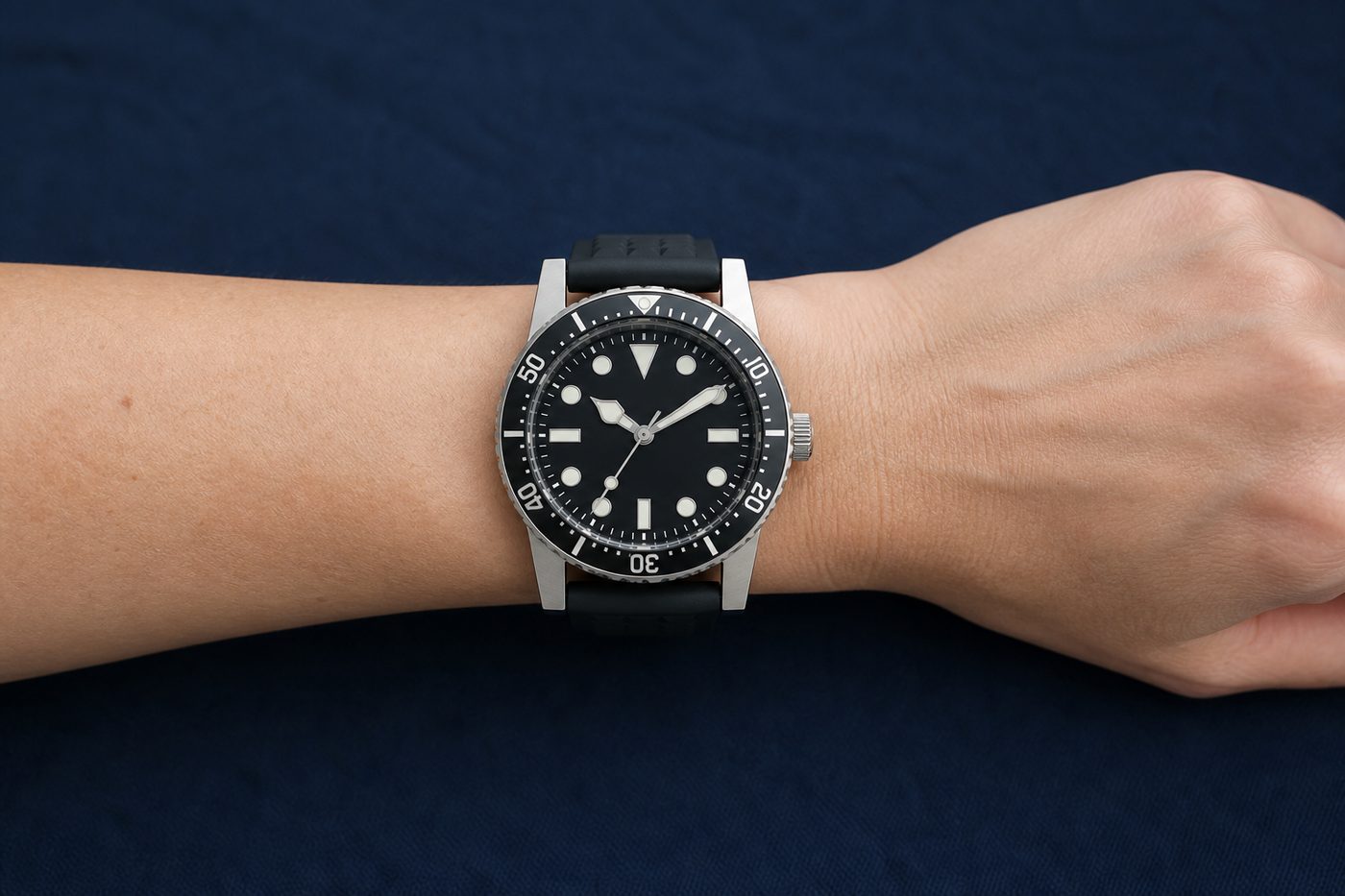
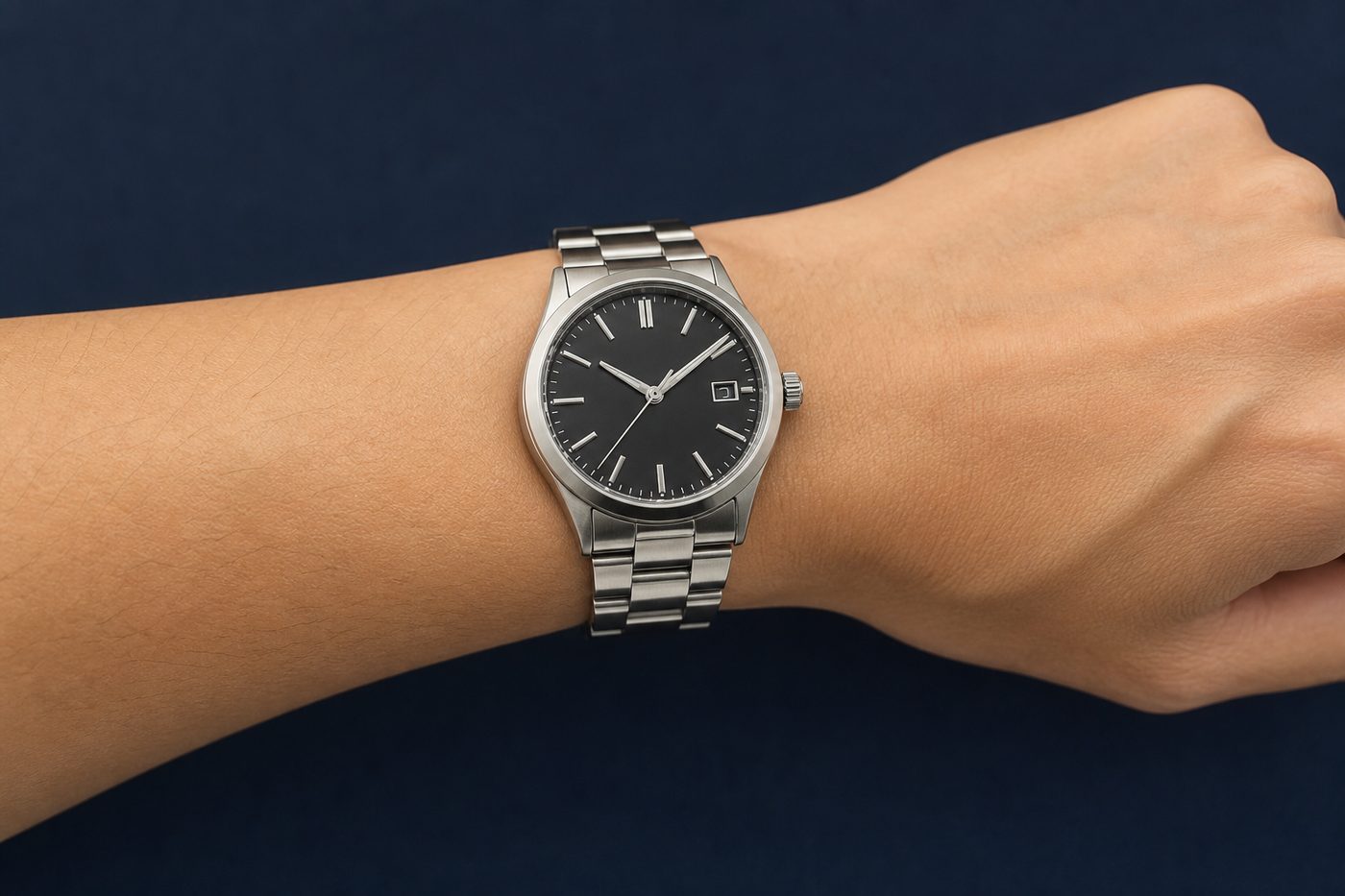
Same illustrative shots already on this site. Not a named model, and not a measured 6.5" wrist. Check lug-to-lug tip to tip on the real piece.
Why diameter alone misleads
Marketing loves a round number. Your wrist does not. Diameter ignores how far the lugs reach, how they curve, how wide the bezel ring frames the dial opening (aperture), and how thick the stack sits under a cuff.
On a narrower wrist, overhang shows up first as lug tips past the bone when your arm hangs naturally — then as rotation, bracelet gap, and a top-heavy feel. Instagram crops hide all of that.
Tip
Write your wrist in millimetres (e.g. 165 mm ≈ 6.5"). Spec sheets and forum lug-to-lug figures are almost always metric. See the full sizing guide if you have not measured yet.
How to measure — or ask at the counter
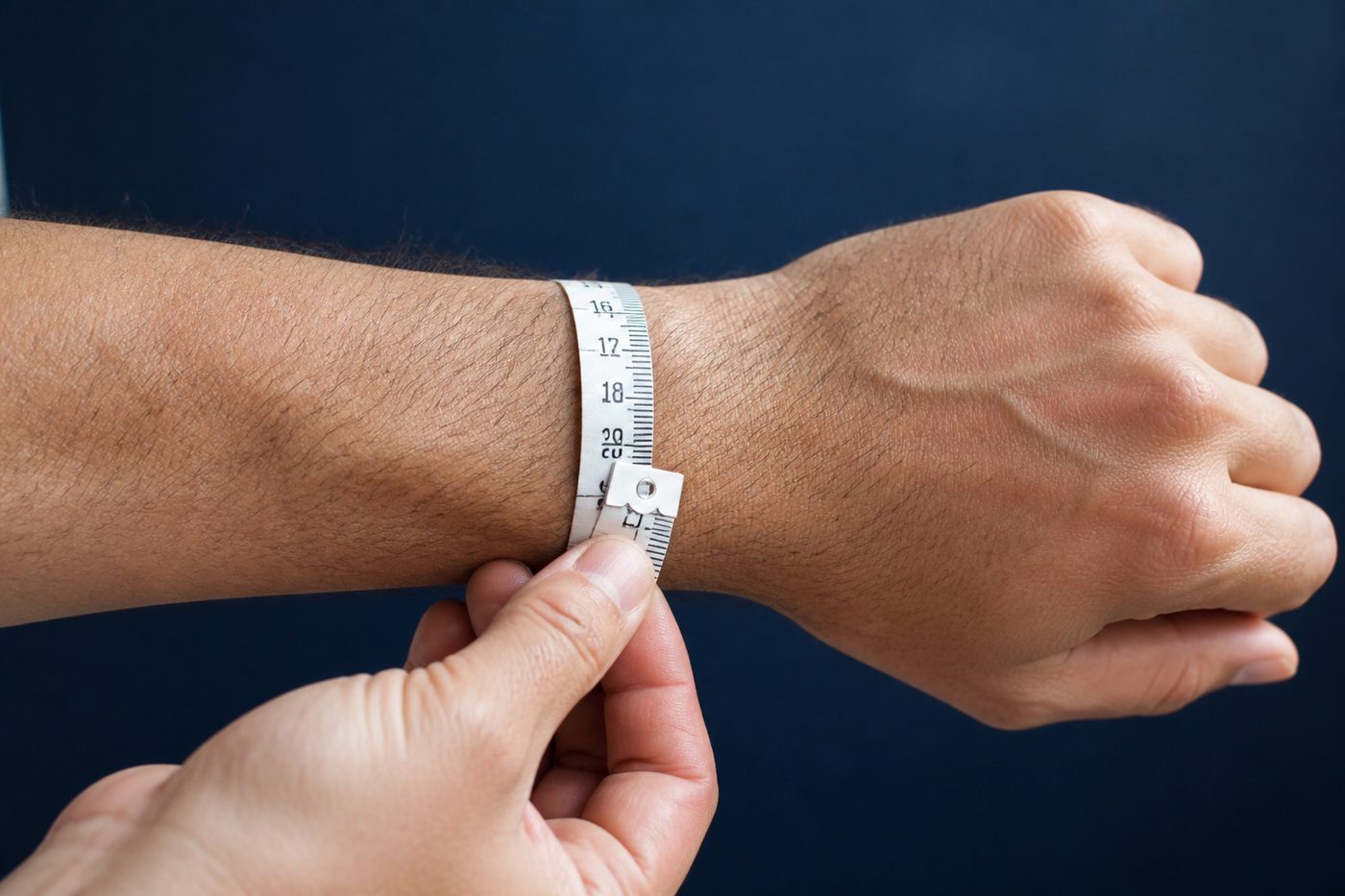
- Know your wrist circumference in mm before you shop.
- Ask staff for lug-to-lug of this exact reference — not “about 40 mm.”
- If they do not know, measure the display piece yourself: ruler or caliper across the outer lug tips, straight line, not along the curve.
- Note thickness and crystal height in the same breath — cuff clearance is a second axis.
- Photograph your own wrist in normal light after ten minutes, not thirty seconds.
Singapore boutiques generally allow a real try-on. Use that. Memory for size across weekends is unreliable — compare two candidates the same visit.
Downturned vs long flat lugs
The overhang and balanced fit pair above is the visual for this. Those shots are illustrative, not a named model.
Downturned / curved lugs follow the wrist and often wear smaller than the diameter suggests. Long flat lugs push the tips outward — common on some tool watches and integrated sports pieces sized for larger arms.
End-link shape matters too. Hollow end-links that leave a gap visually enlarge a modest case. Tight, curved end-links shrink the perceived footprint. See the deep dive in male vs female end-links.
Thickness is not optional
A watch can clear the wrist edge and still fail as a daily under shirt cuffs. Tall crystals, thick divers, and heavy bracelets inflate perceived size on a slim wrist even when lug-to-lug looks fine on paper. Detailed breakdown: case thickness vs domed crystal.
If your life is office and air-con more than dive signalling, thickness often decides the shortlist — which is why mid-size sports-dress pieces show up next to divers in our under-S$10k picks.
Heuristic bands at ~6–7"
Orientation only — bone structure and wear height still move the goalposts. At ~6.5" (≈165 mm), many buyers do well with mid-to-high 30s diameter and lug-to-lug roughly in the mid-to-high 40 mm range. Past ≈48–49 mm tip-to-tip, overhang risk rises fast. Dedicated bands: best watch size for a 6.5" wrist.
| Focus | Usually friendlier | Higher risk on slim wrists |
|---|---|---|
| Lug-to-lug | Short tip-to-tip; downturned curve | Long flat lugs past ≈48–49 mm |
| Diameter | Mid-to-high 30s (some short-lug 40s) | “Compact” 39–40 mm with long lugs |
| Thickness | Easier under ~12–13 mm for cuffs | Tall dive stacks as an office daily |
Counter checklist
- Wrist mm written down (morning + after a warm afternoon if you can).
- Published or measured lug-to-lug for this reference.
- Lug shape: downturned vs flat — look from the side (explainer).
- Thickness + crystal height vs your typical cuff.
- Ten-minute wear, arm hanging naturally; check overhang from side and above.
- Bracelet micro-adjust or honest strap hole — half a link matters at 6.5".
- Own photo in normal light before you decide.
Where to go next
Refresh fundamentals in how to size a watch, then map named models in under-S$10k picks. For DTC / micro options with published short L2L, see microbrands for small wrists.
Related news (optional read)
Trend context: the compact watch comeback and the microbrand lug checklist.
Reality check
Specs vary by reference and year. Always confirm case dimensions for the exact piece you are buying. This page is orientation — not a guarantee that any named length will fit you.